

The 2026 forecast for bees
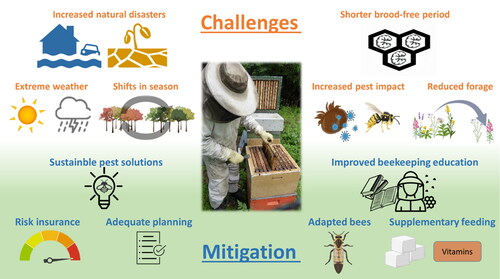
Beekeeping is getting harder. Extreme heat and erratic rain aren't future threats; they are hitting hives now. By 2026, climate instability will be the baseline for how we manage colonies.
UC Davis research clearly shows increasing pressure on bee populations due to these shifts. We’re seeing altered bloom times impacting forage availability, increased pest pressure thriving in warmer winters, and more frequent extreme weather events disrupting colony routines. The effects aren’t uniform, varying significantly by region, but the trend is undeniable.
Managing a colony is already a heavy lift. Adding climate shifts makes it feel impossible, but we can adapt by changing how we house and feed our bees.
The PMC research on beekeepers’ perceptions reinforces this – beekeepers are already noticing changes in honey production, bee behavior, and overall colony health linked to climate variability. Understanding these changes and adapting our methods is no longer optional; it's essential for the survival of our bees and our livelihoods.
Managing heat stress
Rising temperatures are a major threat to bee colonies. Heat stress can disrupt brood development, reduce foraging efficiency, and even lead to colony collapse. Bees maintain a remarkably stable internal hive temperature, but extreme heat pushes their thermoregulation capabilities to the limit. Honey viscosity also decreases with rising temperatures, making it harder for bees to process.
Effective ventilation is paramount. Screened bottom boards are a good starting point, promoting airflow and reducing moisture buildup. Top entrances, created by slightly lifting the inner cover, allow hot air to escape. However, be mindful that increased ventilation can also make the hive more vulnerable to robbing, so consider using robber screens during nectar dearths. A simple addition like a slightly angled top cover can create a natural convection current.
Providing shade is equally important. Avoid direct sunlight on the hive, especially during the hottest part of the day. Natural shade from trees is ideal, but if that's not available, consider using shade cloth or painting the hive a light color to reflect sunlight. Remember, the goal isn’t just to block the sun, but to reduce radiant heat absorption.
Access to water is critical, but it's a delicate balance. Bees need water to cool the hive through evaporative cooling, but they can easily drown in deep water sources. Provide a shallow dish with pebbles or marbles, giving the bees a safe landing spot. Position the water source within a few feet of the hive, but in a shaded area. The PMC research highlights that beekeepers are already adjusting water provisions due to drought conditions.
Relocating hives to cooler spots – higher elevations or areas with more shade – can be a temporary solution during heat waves. However, this is a logistical challenge and may not be feasible for all beekeepers. It's also important to consider the impact on the bees' foraging range.
Rain, Flooding, and Hive Resilience
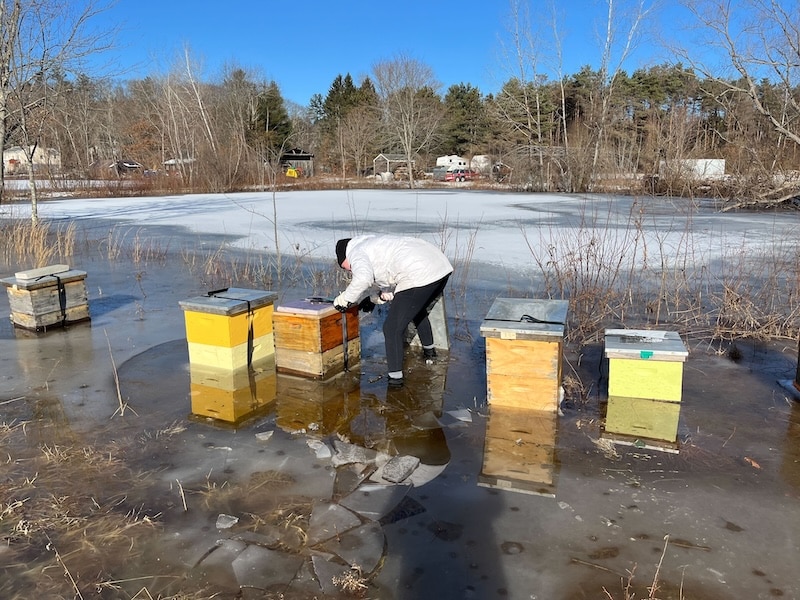
Increased rainfall and flooding pose significant challenges to beekeeping. Excessive moisture can lead to fungal diseases, hive rot, and difficulty for bees to regulate hive temperature. A damp hive is a stressed hive. Proper drainage is the first line of defense.
Hive placement is crucial. Avoid low-lying areas prone to flooding. Elevate hives on sturdy hive stands – concrete blocks or treated lumber – to keep them above potential floodwaters and improve drainage. Ensure the area around the hive slopes away from it, preventing water from pooling.
Wood rots in high humidity. If you live in a flood-prone area, treated lumber or plastic components are better options. Plastic traps condensation, so you'll need to increase airflow to compensate. The right choice depends entirely on your local humidity levels.
Humidity also affects honey storage. High humidity can cause honey to absorb moisture from the air, leading to fermentation and spoilage. Store honey in airtight containers in a cool, dry place. Regularly inspect honey supers for signs of moisture or fermentation. The USDA Beekeeping Guide emphasizes the importance of proper honey storage to prevent losses.
Shifting Bloom Times & Forage
Climate change is disrupting plant bloom times, creating a mismatch between bee foraging activity and available nectar and pollen. This is a complex problem with potentially severe consequences for bee nutrition and colony health. If bees emerge expecting a certain bloom and it hasn’t happened, they can face starvation.
Diversifying forage sources is a key strategy. Plant a variety of bee-friendly plants that bloom at different times throughout the season. Include early-blooming species to provide pollen and nectar when natural sources are scarce. Consider planting trees and shrubs that provide a long-term food source.
Supplemental feeding may be necessary, particularly during periods of nectar dearth. Sugar syrup can provide carbohydrates, while pollen substitutes can provide protein. However, supplemental feeding should be used judiciously, as it can disrupt the bees' natural foraging behavior and potentially spread diseases. It's a short-term fix, not a long-term solution.
Predicting bloom times is becoming increasingly difficult, so adaptability is crucial. Be prepared to move hives to follow bloom patterns if necessary. This requires careful monitoring of local flora and a willingness to adjust your management practices. The UC Davis research suggests that beekeepers are already experimenting with different forage options to mitigate the effects of changing bloom times.
It's important to acknowledge the uncertainty. Our role is to create a resilient landscape that provides bees with the best possible chance of survival.
Continuous Bloom Plants
- Willow (Salix spp.) - An early bloomer, providing pollen when little else is available. Hardiness Zones 2-8. Full sun to partial shade.
- Crocus (Crocus spp.) - One of the first flowers to emerge in spring, offering a vital early nectar source. Hardiness Zones 3-8. Full sun to partial shade.
- Fruit Trees (Malus, Prunus, Pyrus) - Apple, cherry, and pear trees offer a significant nectar flow in spring. Hardiness Zones vary by species (typically 3-8). Full sun.
- Bee Balm (Monarda spp.) - A summer bloomer that is highly attractive to bees and hummingbirds. Hardiness Zones 4-9. Full sun to partial shade.
- Sunflower (Helianthus annuus) - Provides late summer/early fall nectar and pollen. Hardiness Zones 2-11. Full sun.
- Goldenrod (Solidago spp.) - A crucial late-season food source for bees preparing for winter. Hardiness Zones 3-9. Full sun.
- Asters (Symphyotrichum spp.) - Another important fall bloomer, extending the nectar supply. Hardiness Zones 3-8. Full sun to partial shade.
New pest and disease patterns
Climate change is influencing the distribution and severity of bee pests and diseases. Warmer winters allow Varroa mites to survive in greater numbers, increasing the mite load on colonies. Stress from extreme weather weakens bee immune systems, making them more susceptible to diseases like Nosema and American Foulbrood.
Integrated pest management (IPM) is more important than ever. Regular monitoring for pests and diseases is essential. Use a combination of cultural practices, biological controls, and chemical treatments (when necessary) to manage pest and disease levels. Avoid relying solely on chemical treatments, as this can lead to resistance.
Preventative measures are key. Strong, healthy colonies are more resilient to pests and diseases. Provide bees with adequate nutrition, reduce stress, and maintain good hive hygiene. The USDA Beekeeping Guide stresses the importance of biosecurity measures to prevent the spread of diseases.
We may see new pest threats emerge as climate patterns shift. Be vigilant and stay informed about emerging pest and disease risks in your area. Monitor your colonies closely for any unusual symptoms and consult with local bee experts if you suspect a problem.
Varroa Mite Treatment Comparison in a Changing Climate
| Treatment Method | Effectiveness | Climate Impact | Bee Impact | Resistance Risk |
|---|---|---|---|---|
| Formic Acid | Generally Effective | Effectiveness can be reduced in high humidity and temperature extremes. Optimal range is typically 50-90°F. | Can cause temporary bee behavioral changes and potential queen issues if not applied correctly. | Moderate - resistance has been observed, though less frequently than with synthetic miticides. |
| Oxalic Acid | Effective when broodless | Less effective in warmer temperatures; best used during winter when colonies have minimal brood. | Can be toxic to bees if not applied correctly; requires careful dosage and timing. | Low to Moderate - resistance is developing in some populations. |
| Synthetic Miticides (e.g., Apivar, Apistan) | Highly Effective (initially) | Effectiveness is generally consistent across a wider temperature range, but may be affected by extreme heat causing off-gassing. | Potential for residue in wax and honey; can have sublethal effects on bee health. | High - widespread resistance is a significant concern. |
| Thymol-based Products (e.g., ApiLife VAR) | Moderate to Good | Effectiveness is temperature dependent; performs best within a specific temperature window (around 65-85°F). | Generally considered less harsh on bees than synthetic miticides, but can still cause stress. | Moderate - resistance is possible with repeated use. |
| HopGuard | Moderate | Effectiveness may be reduced in very high temperatures. | Generally considered relatively safe for bees when used as directed. | Low to Moderate - resistance monitoring is ongoing. |
| Powdered Sugar Dusting | Limited - primarily for monitoring and reducing phoretic mite loads | Not significantly impacted by temperature. | Minimal direct impact on bee health, but can be stressful. | Very Low - mites cannot develop resistance to physical removal. |
Illustrative comparison based on the article research brief. Verify current pricing, limits, and product details in the official docs before relying on it.
Hive Construction & Material Choices
Hive construction materials and design can contribute to climate resilience. Traditional wooden hives are prone to moisture damage and temperature fluctuations. Plastic hives offer better moisture resistance but can lack thermal mass. Insulated hives can help regulate temperature, but they can also be more expensive.
Wood hives, if properly maintained, can be a good option. Using rot-resistant wood like cedar or cypress can extend the life of the hive. Applying a protective coating can help prevent moisture absorption. However, regular inspections and maintenance are essential.
Plastic hives are lightweight and easy to clean. They are also less susceptible to moisture damage. However, they can lack thermal mass, meaning they heat up and cool down more quickly. This can be a disadvantage in extreme temperatures.
Insulated hives stabilize internal temperatures during heatwaves and freezes. They cost more and require aggressive ventilation to stop moisture buildup, but they save bees in regions with 40-degree temperature swings.
Experimentation with hive paints or coatings to reflect heat or prevent moisture absorption is an area for further research. Using thermal mass – materials that absorb and store heat – could also help regulate hive temperature, but more investigation is needed.
What hive material do you find most effective for protecting your colonies in your local climate?
As extreme weather patterns become more common, the materials you choose for your hives can make a significant difference in colony survival and temperature regulation. Whether you are dealing with intense heat, harsh winters, or unpredictable storms, your hive construction matters. Vote below and share your experience with the Bee Simply community!
Laws and disaster prep
Understanding local beekeeping laws and regulations is crucial, especially in relation to disaster preparedness. Many states and municipalities have specific requirements for hive registration, apiary location, and disease reporting. Ignoring these regulations can result in fines or other penalties.
Registering your hives allows authorities to contact you in the event of a disease outbreak or other emergency. Obtain any necessary permits before establishing an apiary. Familiarize yourself with local beekeeping organizations and resources.
Accessing emergency assistance in the event of a climate-related disaster can be challenging. Having a documented inventory of your apiary – photos, videos, and written lists – can help you file insurance claims and apply for disaster relief funds. The USDA Beekeeping Guide emphasizes the importance of documentation.
Consider purchasing beekeeping insurance to protect yourself against losses due to natural disasters, theft, or liability claims. Bee Simply offers a zip code lookup tool to help you find local beekeeping laws and regulations:
Develop a disaster preparedness plan for your apiary. This plan should include procedures for securing hives, evacuating bees, and contacting local authorities.
No comments yet. Be the first to share your thoughts!